Starlink Mini Power Requirements
What It Actually Uses (Real-World Data from the Field)
Starlink Mini is often marketed as “low power”, but what it actually uses in real mobile setups and how that power is delivered makes a huge difference to reliability, runtime, and overall performance.
At Campervan Builders, we’ve installed and tested Starlink Mini across utes, caravans, canopies, tourers, and fleet vehicles. The numbers below reflect real-world usage, not lab specs.
Real-World Power Usage (What We Actually See)
In practical mobile installations, Starlink Mini typically runs between 20–30 watts once online and stable. That range comfortably covers browsing, streaming, remote work, and general connectivity while travelling.
Power can spike higher briefly during startup or satellite reacquisition — which is why voltage stability matters more than headline wattage figures.
For a deeper breakdown of power delivery options, read:
Best way to power your Starlink Mini on 12 volt
What That Means in Amps (Why Voltage Matters)
Electrical systems don’t care about watts — they care about amps. And as voltage drops, current increases.
Amps = Watts ÷ Volts
Typical running current (20–30W)
At 12.0V (low battery)
- 20W → 1.67A
- 30W → 2.50A
At 13.8V (fully charged battery)
- 20W → 1.45A
- 30W → 2.17A
At 24V systems
- 20W → 0.83A
- 30W → 1.25A
This is why running Starlink Mini directly from raw 12V over longer cable runs often causes issues... lower voltage forces higher current, and higher current creates more losses and instability.
Battery Runtime Examples (Realistic Planning)
Below are realistic examples using typical discharge limits for common battery types: LiFePO4 at 80% usable capacity and AGM at 50% usable capacity.
100Ah Lithium (LiFePO4 – 80% usable)
Usable energy ≈ 1,000Wh
- 20W → ~50 hours
- 25W → ~40 hours
- 30W → ~33 hours
100Ah AGM (50% usable)
Usable energy ≈ 600Wh
- 20W → ~30 hours
- 25W → ~24 hours
- 30W → ~20 hours
Small inefficiencies (voltage drop, poor wiring, or unstable supply) can easily cost several hours of runtime across a trip.
Why Voltage Drop Kills Runtime (and Stability)
From an installer’s perspective, this is the number one cause of Starlink Mini power issues. When voltage drops:
- Starlink draws more current to maintain power
- Higher current increases cable losses
- Losses cause further voltage drop
- Instability, dropouts, or reboot loops follow
This is why we recommend boosted, regulated power supplies rather than raw 12V feeds. For maximum reliability in permanent installs, we recommend:
Treklo K2 Pro (12V/24V boosted supply for Starlink Mini)

Cable Size Matters (Battery → Power Solution → Starlink)
Your Starlink Mini power setup isn’t just the device — it’s the entire path from battery → booster → Starlink. Undersized cable between the battery and the booster (or between the booster and Starlink) still causes voltage drop and wasted power.
In many installs, spending $10–$15 more on correctly sized cable can deliver:
- 20–30% more usable runtime
- Better startup stability
- Less heat and stress on electrical components
Use our calculator to size your cable correctly:
Cable size calculator
The “$10–$15 Wiring Upgrade” Reality
On longer runs (10–15m), better cable can save meaningful power losses. When Starlink Mini averages 20–30W, even a small reduction in wasted watts can translate into 20–30% more usable runtime in real-world conditions.
For touring setups that move between vehicles, a regulated portable option is often the easiest win:
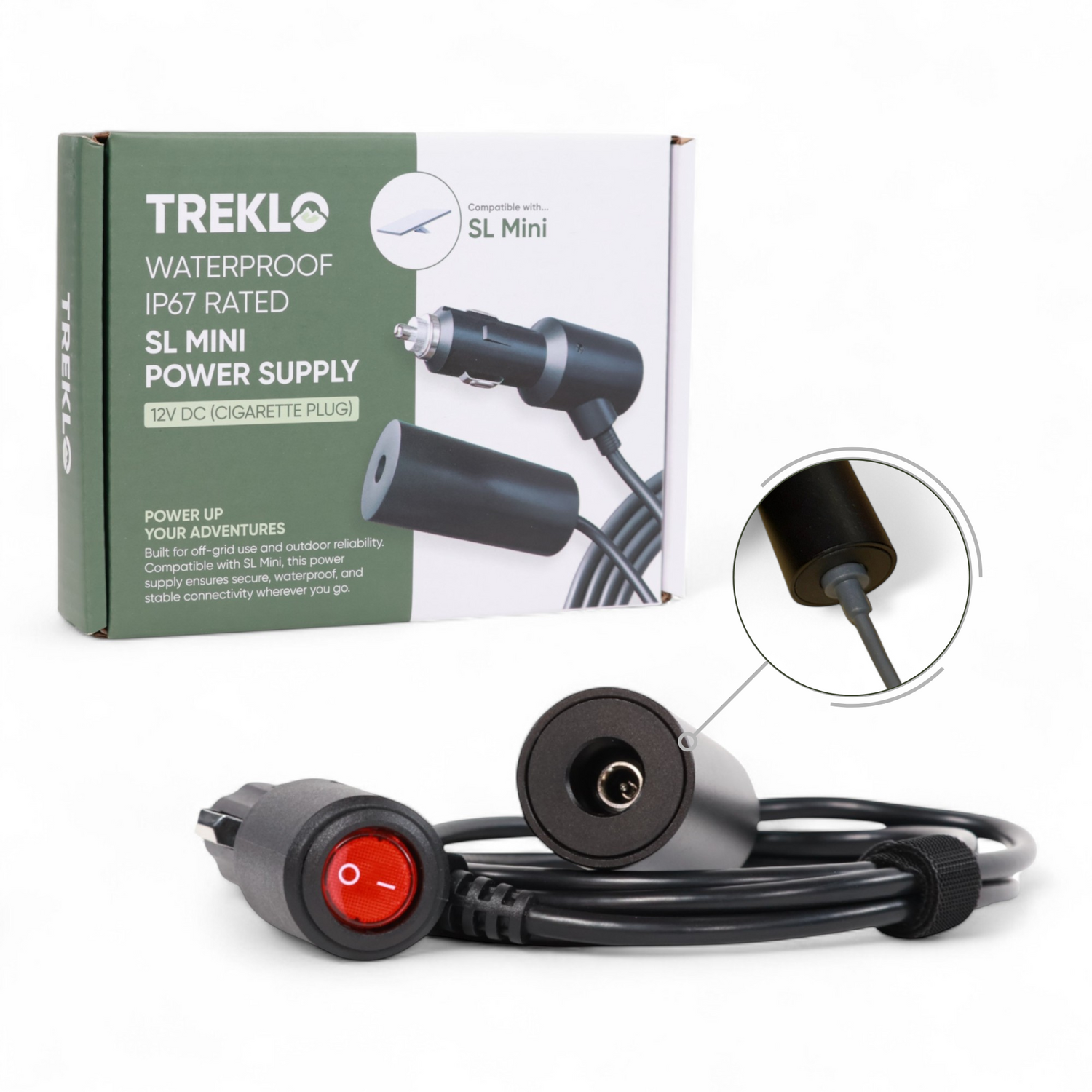
12V Starlink Mini Plug & Play (portable boosted solution)
Starlink Mini Voltage Range (And the Sweet Spot)
Starlink Mini can operate across a wide DC range, but from hands-on experience, ~30V is the sweet spot for mobile installs.
- Lower current than 12V
- Less voltage drop over long runs
- Great efficiency balance for caravans, canopies, and vehicles
Boosting higher than needed (e.g. 48V) generally increases conversion losses without meaningful real-world gains compared to a good 30V solution.

Startup Power: The Hidden Requirement
While Starlink Mini’s average draw is modest, startup is not. In the field we see Starlink Mini demand around 100W instantaneous power during startup. If your supply voltage sags at that moment, it can fail to boot or enter a restart loop.
That’s why regulated boosted solutions are so effective: they maintain voltage under load when startup current demand hits.
Installer’s Summary (What Actually Works)
- Starlink Mini typically runs at 20–30W in real-world mobile installs
- Reliability depends on voltage quality, not just wattage
- Voltage drop increases current and losses
- Proper cable sizing can deliver 20–30% more runtime
- ~30V boosted systems offer the best balance for mobile use
- Startup power capability is essential to avoid boot cycling
Recommended solutions:
Treklo K2 Pro | 12V Starlink Mini Plug & Play
FAQ
How many watts does Starlink Mini use in real-world travel setups?
In our installs, Starlink Mini typically runs at 20–30 watts once stable and online. Short spikes can occur during startup or satellite reacquisition.
Why do amps increase when voltage drops?
Because power is watts, and Amps = Watts ÷ Volts. If voltage drops, Starlink needs more current (amps) to maintain power. More current also increases cable losses, which can worsen voltage drop and instability.
What battery runtime can I expect?
As a rough guide with a 100Ah battery: lithium (80% usable) can often deliver ~33–50 hours at 20–30W, while AGM (50% usable) often delivers ~20–30 hours depending on load and conditions.
Why does cable size matter for Starlink Mini?
Cable size affects voltage drop. Undersized cable between the battery and your power solution (and between the power solution and Starlink) can waste power and reduce stability. In many setups, upgrading cable can deliver 20–30% more usable runtime.
What voltage is best for powering Starlink Mini?
From hands-on experience, ~30V is the ideal balance for mobile installs. It reduces current draw and voltage drop over long runs without adding unnecessary conversion losses.
Why can Starlink Mini boot-cycle on startup?
Startup can demand around 100W instantaneous power. If your supply voltage drops during that moment due to weak wiring or a marginal power source, Starlink Mini may fail to start or repeatedly reboot. A regulated boosted supply helps prevent this.