Yes, an inverter offers the simplest way to power your Starlink internet setup in a camper. However, it must be an inverter that produces the correct sine wave to prevent overheating of the adapter.
Starlink internet kits come with a 100–240V AC adapter as the standard power supply unit. This means you'll need an inverter to operate your Starlink setup in a campervan, caravan or RV. But is an inverter a good choice for powering Starlink while travelling or camping off-grid?
Overall, an inverter is a valuable addition to your adventure vehicle, enabling you to operate AC-powered devices with ease. In this guide, we'll cover everything you need to know about powering your Starlink setup with an inverter, including the right type of inverter to ensure trouble-free operation.
What's the Difference Between DC Power, AC Power and Power Inverters?
In campervans, caravans, RVs and motorhomes, the primary power source is typically batteries, sometimes supplemented by solar panels. Batteries and solar panels generate DC (direct current) power, which flows in a single direction at a constant polarity and voltage.
DC power is generally low-voltage, making it unsuitable for power-hungry devices that typically require AC (alternating current) electricity. AC power is high-voltage electricity that rapidly alternates polarity, switching between positive and negative. Besides powering high-voltage devices, AC can travel long distances with minimal energy loss.
Most circuits use either DC or AC power. Meanwhile, many electronics, including Starlink, come with an AC plug or adapter as the primary power supply. If only DC power is available, you'll need to convert it to AC to use with your device.
A power inverter converts DC electricity to AC. It features a built-in rectifier for DC-to-AC conversion and a control circuit to ensure the output AC power has the appropriate voltage, frequency and waveform.
What AC Input Does a Starlink Kit Need?
Like most electronics, Starlink provides its satellite internet kits (Gen 1, Gen 2, Gen 3 and Mini) with an AC power supply unit rated for 100–240V AC (50–60Hz) input.
This means you can plug the Starlink power supply unit into an AC outlet producing 100–240V at an oscillating frequency of 50Hz or 60Hz. In Australia, household power outlets typically supply 230V AC@50Hz, while in countries like the United States and Canada, the standard is 120V AC@60Hz.
When purchasing electronics from international manufacturers, you must ensure the power supply unit will be compatible with your outlets. Starlink, an American company, provides a versatile AC power brick rated for 100–240V (50–60Hz), making it compatible with standard AC sockets in homes or campsites worldwide.
When travelling or camping off-grid in your camper, you'll likely have only a DC power supply (unless you have an AC generator onboard). As such, you'll need a power inverter to convert your DC power supply into an AC format compatible with your Starlink's 100–240V adapter.
What's the Right Type of Inverter for Powering Starlink in My Campervan?
There are two main types of power inverters: pure sine wave and modified sine wave. The two types are usually available in various configurations.
For powering your Starlink kit, we recommend a pure sine wave inverter, which produces the cleanest, smoothest AC electricity, closely resembling mains grid power. Its advanced electronics result in electricity with low harmonic distortion (3% or less), ensuring your Starlink power supply unit operates correctly without issues like overheating.
A modified sine wave inverter can still accept your Starlink power supply adapter. However, it switches polarities abruptly in a pattern of prolonged highs, lows and plateaus, leading to an unbalanced power output. This can cause your adapter's internal components to heat up and potentially overheat.
Inverters are designed for specific DC input voltages, such as 12V, 24V or 48V. When selecting an inverter for your Starlink internet kit, ensure it matches your camper's battery system. An inverter with incompatible DC input requirements won't function and may end up damaging its internal DC bus.
Which Inverters Are Compatible with Starlink? 8 Options for Campervans and Caravans
Below are examples of DC-to-AC power inverters suitable for powering Starlink in campervans, caravans, RVs and motorhomes:
Victron Phoenix 12/500 230V DC – AC Inverter
- Supports an input voltage of 9.2–17V DC
- Outputs 210–245V AC@50 or 60Hz
- 500W continuous power, 900W peak
- Utilises pure sine wave inverter technology
- Includes screw terminals for DC connection
- Comes with a standard AU/NZ outlet socket
- Rugged steel housing with a heavy-duty plastic cover
- Supports Bluetooth connectivity with a VE.Direct smart dongle
Victron Phoenix 24/375 230V DC – AC Inverter
- Supports an input voltage of 18.4–34V DC
- Outputs 210–245V AC@50 or 60Hz
- 375W continuous power, 700W peak
- Utilises pure sine wave inverter technology
- Includes screw terminals for DC connection
- Comes with a standard AU/NZ outlet socket
- Rugged steel housing with a heavy-duty plastic cover
- Supports Bluetooth connectivity with a VE.Direct smart dongle
Victron Phoenix 12/800 230V DC – AC Inverter
- Supports an input voltage of 9.2–17V DC
- Outputs 210–245V AC@50 or 60Hz
- 800W continuous power, 1500W peak
- Utilises pure sine wave inverter technology
- Includes screw terminals for DC connection
- Comes with a standard AU/NZ outlet socket
- Rugged steel housing with a heavy-duty plastic cover
- Supports Bluetooth connectivity with a VE.Direct smart dongle
Victron Phoenix 24/1200 230V DC – AC Inverter
- Supports an input voltage of 18.4–34V DC
- Outputs 210–245V AC@50 or 60Hz
- 1200W continuous power, 2200W peak
- Utilises pure sine wave inverter technology
- Includes screw terminals for DC connection
- Comes with a standard AU/NZ outlet socket
- Rugged steel housing with a heavy-duty plastic cover
- Supports Bluetooth connectivity with a VE.Direct smart dongle
Enerdrive Epower (2600 Watt) 12V DC – AC Inverter
- Supports an input of 10.5–15.5V DC
- Outputs 230V AC@50Hz
- 2600W continuous power output
- Utilises pure sine wave inverter technology
- Includes M8 bolts for DC battery connection
- Comes with a standard AU/NZ outlet socket
- Removable status and remote control display panel
Victron Phoenix 12/2000 230V DC – AC Smart Inverter
- Robust steel construction
- Supports an input voltage of 9.3–17V DC
- Outputs 210–245V AC@50 or 60Hz
- 2000W continuous power, 4000W peak
- Utilises pure sine wave inverter technology
- Includes M8 bolts for DC battery connection
- Comes with standard AC screw terminals
- Built-in Bluetooth for phone/tablet/laptop integration
Victron Phoenix 12/3000 230V DC – AC Smart Inverter
- Robust steel construction
- Supports an input voltage of 9.3–17V DC
- Outputs 210–245V AC@50 or 60Hz
- 3000W continuous power, 6000W peak
- Utilises pure sine wave inverter technology
- Includes M8 bolts for DC battery connection
- Comes with standard AC screw terminals
- Built-in Bluetooth for phone/tablet/laptop integration
Victron Phoenix 24/5000 230V DC – AC Smart Inverter
- Robust steel construction
- Supports an input voltage of 18.6–34V DC
- Outputs 210–245V AC@50 or 60Hz
- 5000W continuous power, 10000W peak
- Utilises pure sine wave inverter technology
- Includes M8 bolts for DC battery connection
- Comes with standard AC screw terminals
- Built-in Bluetooth for phone/tablet/laptop integration
Important note: The Victron inverters listed are available for either 12V or 24V DC input, ensuring you can find a suitable inverter for the Starlink internet setup in your camper. These inverters are available in "analogue" or newer "smart" versions, whereby both allow remote monitoring on a phone or tablet. However, smart Victron inverters include built-in Bluetooth for instant configuration, while analogue models require a VE.Direct Bluetooth Smart dongle.
Is an Inverter Good for Powering Starlink in Campervans, Caravans and RVs?
Yes, a high-quality inverter is ideal for powering your Starlink Mini, Gen 3, Gen 2 or Gen 1 system in a camper. Once set up, the inverter allows effortless operation by simply plugging the provided Starlink power supply adapter into its AC outlet socket. Your Starlink will function as expected if the inverter provides the correct AC output (100–240V) and uses pure sine wave technology.
Another advantage of an inverter is the ability to connect a power extension with multiple AC outlet sockets. This allows you to power not only your Starlink setup but also other AC-powered electronics in the camper.
That said, the inverter's total AC output must handle the maximum power consumption of the Starlink setup and any other connected electronics. The "maximum power consumption" includes both continuous operating power and peak/surge draw. Hence, the reason you see inverters include specifications for "continuous power" and "peak/surge power" output.
A critical consideration is that the total power (continuous and surge) used by your Starlink system and other devices comes from your camper's battery system. However, inverters lose some energy during DC-to-AC conversion, referred to as efficiency loss.
Low-efficiency inverters, such as older models, lose significant energy as heat. Conversely, a highly efficient inverter minimises energy loss, ensuring your Starlink and other devices make better use of your battery system. Therefore, when shopping for an inverter for powering your Starlink setup, consider a model with as high efficiency as possible.
How Efficient Are These Starlink-Compatible Inverters?
Below is a breakdown of the maximum efficiency of the DC-to-AC inverters we referenced earlier. You'll notice the efficiency ratings generally increase with higher output power:
| Inverter | Maximum Efficiency | Maximum Power Generated |
|---|---|---|
| Victron Phoenix 12/500 230V DC – AC Inverter | 90% | 500W Continuous, 900W Peak |
| Victron Phoenix 24/375 230V DC – AC Inverter | 89% | 375W Continuous, 700W Peak |
| Victron Phoenix 12/800 230V DC – AC Inverter | 90% | 800W Continuous, 1500W Peak |
| Victron Phoenix 24/1200 230V DC – AC Inverter | 91% | 1200W Continuous, 2200W Peak |
| Victron Phoenix 12/2000 230V DC – AC Smart Inverter | 92% | 2000W Continuous, 4000W Peak |
| Enerdrive Epower (2600 Watt) 12V DC – AC Inverter | 92% | 2600W Continuous |
| Victron Phoenix 12/3000 230V DC – AC Smart Inverter | 93% | 3000W Continuous, 6000W Peak |
| Victron Phoenix 24/5000 230V DC – AC Smart Inverter | 95% | 5000W Continuous, 10000W Peak |
Final Thoughts
If you already have an inverter in your camper, you can plug in your Starlink power supply adapter. A high-quality inverter's socket functions like a standard household AC outlet, allowing you to simply connect the adapter, and your Starlink will power on and operate as intended.
If you don't have an inverter, you should consider purchasing one. Just make sure the inverter you choose is the right size for your needs, based on the total power draw of your Starlink setup and any other AC devices you plan to run simultaneously.
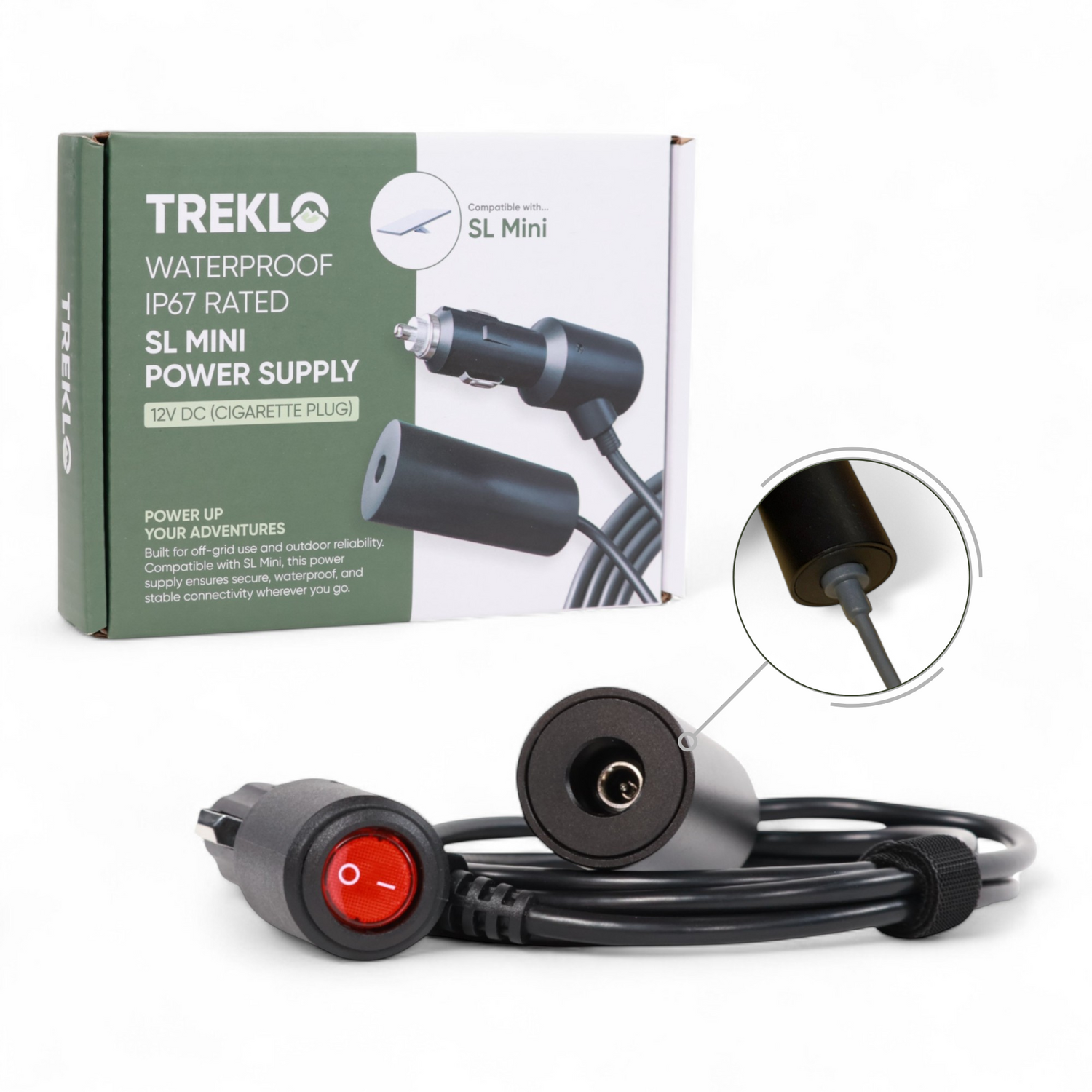
However, all inverters, regardless of their efficiency, lose some battery energy during DC-to-AC conversion. This is why a Starlink DC conversion power supply typically saves 2 watts to 15 watts (or more) of power when set up to operate the Gen 3, Gen 2 or Mini kits.
Frequently Asked Questions
Do I need a pure sine wave inverter for Starlink?
Yes, we recommend a pure sine wave inverter. It produces clean AC power with low harmonic distortion (3% or less), so your Starlink power supply operates correctly. A modified sine wave inverter can work, but its unbalanced output can cause the adapter's internal components to heat up and potentially overheat.
What AC input does the Starlink power supply accept?
Starlink's power supply units for the Gen 1, Gen 2, Gen 3 and Mini kits are rated for 100–240V AC at 50–60Hz, which covers Australia's standard 230V AC@50Hz outlets.
What size inverter do I need for Starlink?
Your inverter's total AC output must handle the maximum power consumption — both continuous and peak/surge draw — of your Starlink setup plus any other connected electronics. It must also match your camper's battery voltage (12V, 24V or 48V).
Can I power Starlink without an inverter?
Yes. Because all inverters lose some battery energy during DC-to-AC conversion, a Starlink DC conversion power supply typically saves 2 to 15 watts (or more) when running the Gen 3, Gen 2 or Mini kits.
Ready to power your Starlink off-grid? Browse our range of 12-volt inverters for DIY campervans and caravans at Campervan Builders.