Starlink Mini Not Working on 12V? Here’s How to Power It Properly
If you’ve recently installed a Starlink Mini in your campervan, caravan, or RV, you’re probably keen to enjoy fast internet wherever you park. But many people discover that running Starlink Mini on a standard 12-volt system can be unreliable — or not work at all.
If your Starlink Mini is shutting down, refusing to start, or dropping out, you’re not alone. Below we explain why Starlink Mini struggles on 12V and the best proven ways to power it reliably in off-grid vehicles.
Why Starlink Mini Doesn’t Work Reliably on 12 Volts
Despite its compact size, Starlink Mini is sensitive to voltage quality and stability. Vehicle “12V” systems aren’t truly 12V — and they fluctuate constantly.
1) Voltage mismatch (the core issue)
Starlink Mini needs a stable, correctly regulated supply. A typical vehicle system can swing from roughly 11.5V to 14.6V+ depending on battery state, alternator output, solar input, and load changes.
Without proper regulation/boosting, you can see:
- Failure to start
- Random shutdowns
- Dropouts under load
- Inconsistent performance
2) Power fluctuations in real vehicles
Off-grid electrical systems are dynamic. Fridges cycle, inverters surge, alternators vary, and batteries behave differently (AGM vs lithium). These fluctuations are a common cause of Starlink instability when running “straight 12V”.
3) Stock power supplies aren’t vehicle-friendly
The standard Starlink power setup is designed around stable household AC power, not noisy DC vehicle systems. Using inverters or improvised adapters adds losses, heat, and extra failure points. A direct, regulated DC solution is the better approach.
Solutions That Actually Work on 12V
There are a few ways to do this properly, from the easiest plug-and-play option through to the most reliable boosted DC solution.
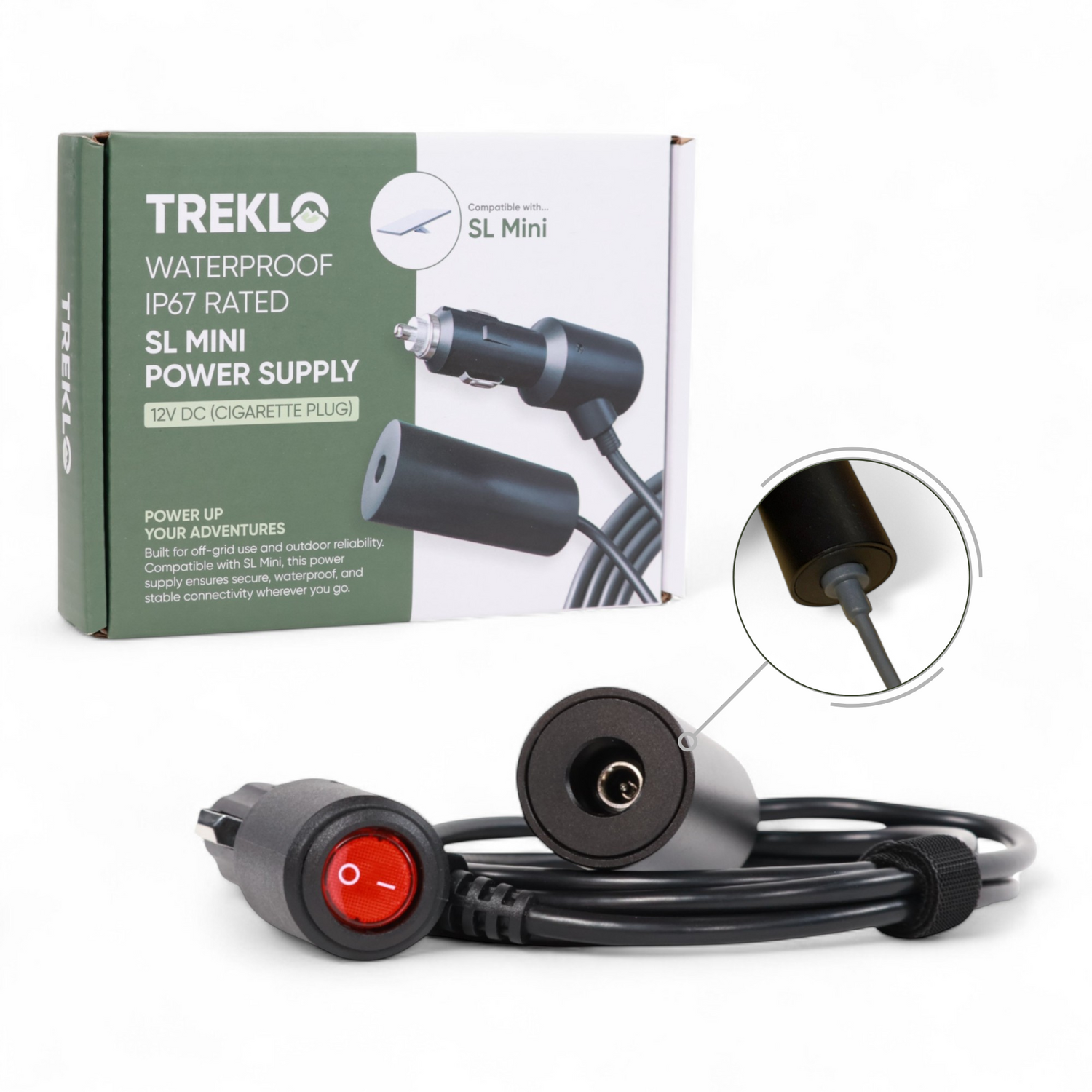
1) Plug-and-Play Adapters (fastest and simplest)
If you want a straightforward solution with minimal wiring, a purpose-built plug-and-play adapter is the easiest route. These are designed to integrate cleanly with common vehicle power setups.
Pros: Quick install, no technical expertise required, tidy and portable.
Cons: Less flexibility if you’re pushing longer runs or chasing maximum stability under all conditions.
2) DIY Installation Kit (more control, still proven)
If you’re comfortable with basic wiring, a DIY kit can be a great option. It’s a practical middle ground for people who want a custom install.
Pros: Customisable, cost-effective, better suited to more permanent installs.
Cons: Requires time and basic electrical confidence to install correctly.
3) Boosted DC Power Supply (best reliability + best practice)
From an expert installation perspective, the most reliable way to power Starlink Mini in an off-grid vehicle is a regulated, boosted DC power supply. This ensures Starlink sees stable voltage regardless of battery state or load changes.
The biggest benefit is consistent performance .. especially when you’re parked, batteries are lower, or other loads are cycling. It also supports longer cable runs with less chance of voltage drop causing issues.
Recommended boosted supply:
Treklo K2 Pro 12V/24V DC Boosted Power Supply for Starlink Mini
Why K2-series style boosters are popular:
- Stable, regulated output under load
- Better efficiency than inverter-based setups
- More predictable performance across battery states
- Remote switching capability (depending on model/setup)
Extra tip: Follow the proven 12V powering method
For the full best-practice method (wiring approach, stability tips, and what to avoid), read: Best Way to Power Your Starlink Mini on 12 Volt .
Conclusion
Starlink Mini can work brilliantly in a 12V caravan, campervan, or RV — but it needs stable, regulated power. If you want the simplest route, go plug-and-play. If you want the most reliable off-grid performance long term, a boosted supply is best practice.
- Fastest install: Plug-and-play adapters
- More control: DIY kit
- Best reliability: Boosted DC supply (K2 Pro)
Frequently Asked Questions
Why does Starlink Mini struggle on “12V” power?
Vehicle 12V systems fluctuate constantly (battery state, alternator, solar input, and other loads). Starlink Mini is sensitive to voltage stability, so unstable supply often causes shutdowns, dropouts, or failure to start.
What’s the easiest way to power Starlink Mini on 12V?
A purpose-built plug-and-play adapter is the simplest option. See: 12V Starlink Mini Plug and Play (IP67) or Plug and Play (Anderson Plug) .
Is a boosted power supply better than plug-and-play?
For maximum reliability, yes. A boosted, regulated DC supply provides stable voltage under load and across changing battery states. This reduces dropouts and improves consistent operation, especially in off-grid conditions.
Which boosted solution do you recommend for Starlink Mini?
The Treklo K2 Pro 12V/24V DC Boosted Power Supply for Starlink Mini is a proven option for stable, regulated powering in off-grid vehicles.
Where can I read the full best-practice method for powering Mini on 12V?