The last thing you want is your camper's battery bank dying while off-grid. Many rookies to caravanning and RVing often assume a 100Ah battery suffices for a day's use, but sometimes even a 200Ah lithium battery with 100% DoD is barely enough for a single day.
Therefore, properly sizing your caravan battery setup is critical when preparing your campervan, caravan, or motorhome for a trip. It ensures you'll have sufficient power for all your electrical needs, keeping devices and appliances running consistently, even without driving or solar input.
In this quick guide, we'll outline seven simple steps to calculate the perfect battery bank size for your camper's electrical needs. The steps are easy to understand, even for beginners without technical knowledge.
How Do You Calculate the Perfect Battery Bank Size for a Campervan, Caravan, or RV?
Never rely on guesswork when choosing the batteries for your campervan (or any other adventure vehicle), as many beginners do. Randomly selected leisure batteries are often unreliable, leading to frequent power shortages and limited appliance use.
Properly sizing a battery bank for your campervan, caravan, or motorhome is so simple, as you only need to:
Step 1: Determine the Devices and Appliances You Need
The first step in sizing your leisure battery bank is identifying the devices and appliances you'll power. This is critical, as overlooking even a single watt can disrupt your target days of autonomy.
Be thorough when listing all electronics you'll use on your trip, including even items you might acquire later. Your list should include each item and its power consumption rate.
Nonetheless, devices and appliances vary electrically. Some require AC (alternating current), others DC (direct current). We even have certain DC-powered devices disguised as AC-powered, such as Starlink internet kits.
Essential DC Electronics for Campervans
As a caravanner, RVer, or boondocker, prioritise DC-powered electronics, as your camper's primary power sources — battery, alternator, and solar — generate DC output.
Your list of DC devices should include items wired directly to a fuse block or plugged into a socket, such as:
- Downlights: 2.5–10W
- Reading lights: 3–10W
- Water pump: 50–100W
- Low-voltage air fan: 1–10W
- 12V fridge/cooler box: 40–150W
- 12V water heater: 150–300W
Essential AC Electronics for Campervans
Some essential household electronics for your campervan or motorhome require a 230V AC outlet. These power-hungry devices won't operate on DC power, even if connected. Examples include:
- Blender: 15–5000W
- Coffee maker: 400–4000W
- Air conditioner: 500–3500W
- Induction cooker: 500–3500W
- Microwave/food warmer: 100–2000W
Essential DC Electronics Disguised as AC
The third category on your list includes devices that plug into an AC outlet but operate on DC power via an AC adapter ("wall wart") that converts the output to DC. Examples include:
- Phones: 5–20W
- Tablets: 10–50W
- Starlink: 60–200W
- Laptops: 30–300W
- Cameras: 10–50W
- Smartwatches: 2–17W
- 12V travel routers: 5–20W
- Phone power banks: 30–75W
- Stereo systems: 10–100W
- Bluetooth speakers: 5–100W
- Desktop computers: 100–500W
- Video game consoles: 16–250W
- Printers and photocopiers: 30–1500W
Starlink internet kits fall into this category since their power supply bricks convert your 230V (or 110V) AC to the appropriate DC output:
- Starlink Gen 2: requires 48V DC
- Starlink Gen 3: requires 56V DC
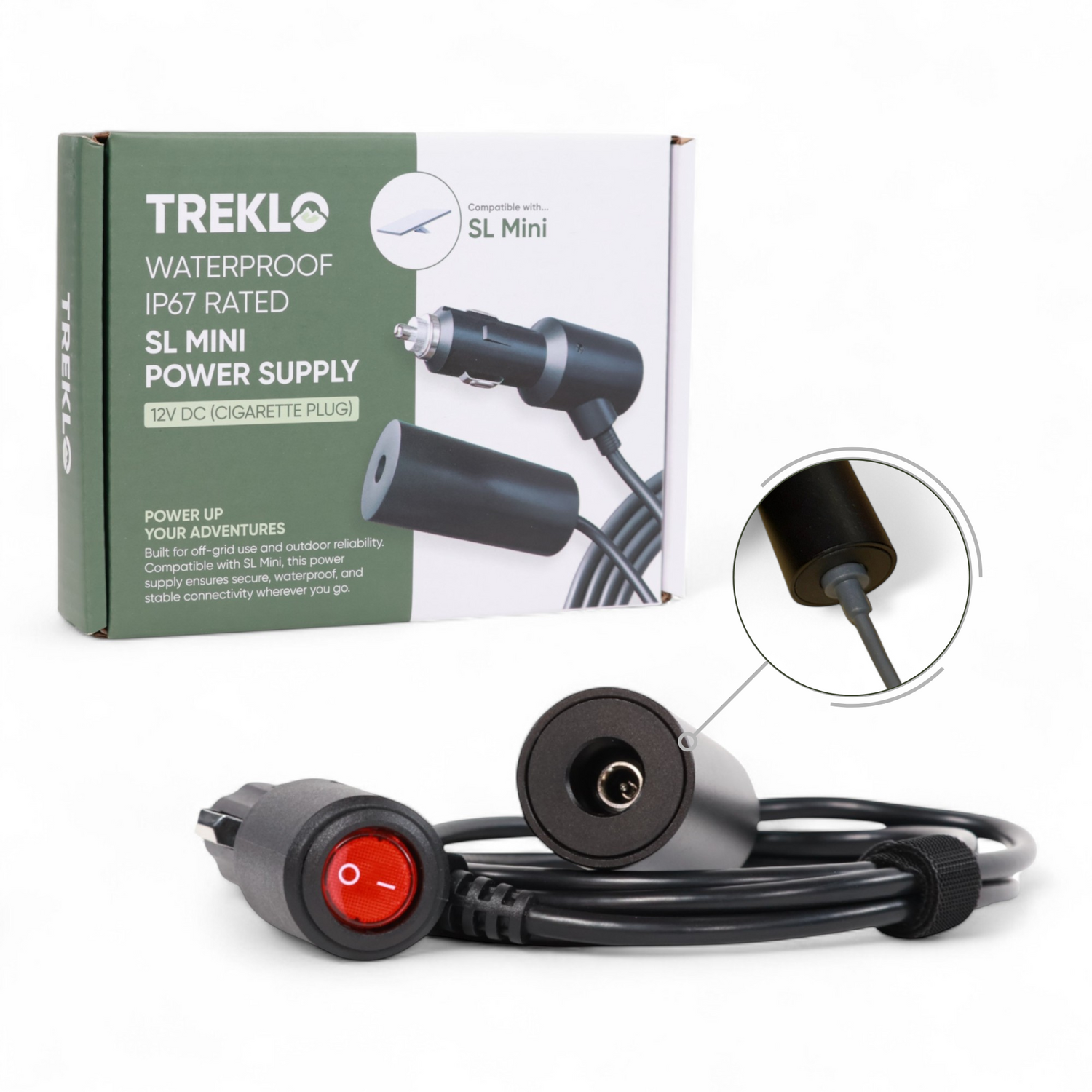
- Starlink Mini: requires 12V–48V DC (30V DC recommended)
Important note:
- Some devices, like fridges and water heaters, are available in AC (230V or 110V) or DC (12V, 24V, or 48V) versions designed for campervans, caravans, and RVs.
- Power consumption ratings vary by device, even when they are all the same type. Therefore, confirm exact electrical ratings by checking the device's label, user manual, or manufacturer's specifications online. If you can't find the details, contact the manufacturer or seller for assistance.
Step 2: Pick Your Preferred Days of Autonomy
After listing your devices and appliances, decide your preferred days of autonomy — the number of days your battery bank should power your loads without recharging.
For the best off-grid experience, we recommend a minimum of two full days of autonomy to account for days without sun or driving. You can choose more days, but this will require a larger battery capacity.
To calculate the total power needed, multiply your daily power consumption by your preferred days of autonomy.
Step 3: Decide Your Battery Voltage
Next, you should determine the voltage of the leisure battery bank you want to use. It's a critical step as it allows you to calculate the power consumption of your devices in amps using Watts' Law:
Power (watts) = Current (amps) × Voltage (volts). Thus, Amps = Watts / Volts, and Volts = Watts / Amps.
The tables below outline the devices and appliances listed earlier, with their average power consumption in watts and amps. We have created three different tables for DC devices that require constant power, rechargeable DC devices, and AC devices.
Table 1 (a): DC Devices and Appliances Requiring Constant Power Supply
| Power Use (in Watts) | No. of Items | T.P. (in Watts) | T.P. (in Amps) | Hours Used per Day | Amp-hour per Day | |
|---|---|---|---|---|---|---|
| Downlights | 2.5 watts | 20 | 50W | 4.17A | 5h | 20.85Ah (250Wh) |
| Reading lights | 3 watts | 2 | 6W | 0.5A | 2h | 1.0Ah (12Wh) |
| Starlink Mini | 60 watts | 1 | 60W | 5.0A | 18h | 90Ah (1080Wh) |
| DC air fan (low power) | 1.44 watts | 2 | 2.88W | 0.24A | 6h | 1.44Ah (17.28Wh) |
| DC air fan (high power) | 4.2 watts | 2 | 8.4W | 0.7A | 5h | 3.5A (42Wh) |
| Low-voltage water heater | 180 watts | 1 | 180W | 15.0A | 0.14h | 2.1Ah (25.2Wh) |
| Stereo system | - | - | - | - | - | - |
| Printer/photocopier | - | - | - | - | - | - |
| Video game consoles | - | - | - | - | - | - |
| Water pump | 50 watts | 1 | 50W | 4.17A | 0.34h | 1.42Ah (17.0Wh) |
| WiFi routers | 12 watts | 1 | 12W | 1.0A | 18h | 18Ah (216Wh) |
| 12V fridge | 60W | 1 | 60W | 5.0A | 20h | 100Ah (1200Wh) |
| Cumulative Ah per day | - | - | - | - | 238.31Ah | |
| Cumulative Wh per day | - | - | - | - | - | 2,859.48Wh |
Table 1 (b): DC Devices and Appliances that Require Recharging
| Battery Size (in Wh) | Battery Size (in Ah) | Times Charged per Day | Total Wh per Day | Total Ah per Day | |
|---|---|---|---|---|---|
| Main cell phone | 17.6Wh | 4.00Ah | 2 | 35.2 | 8.00 |
| Secondary cell phone | 11.91Wh | 3.13Ah | 2 | 23.82 | 6.26 |
| Tablet | 43.35Wh | 11.30Ah | 1 | 43.35 | 11.30 |
| Laptops | 90Wh | 4.74Ah | 3 | 270 | 14.22 |
| Camera | 25.9Wh | 3.5Ah | 1 | 25.9 | 3.50 |
| Bluetooth speaker | 190Wh | 10Ah | 1 | 190 | 10.00 |
| Smart watch | 2.29Wh | 0.59A | 1 | 2.29 | 0.59 |
| Phone power bank | 74Wh | 20Ah | 1 | 74 | 20.00 |
| Cumulative Watt-hour (Wh) per day | - | - | - | 664.56 | |
| Cumulative Amp-hour (Ah) per day | - | - | - | 73.87 |
Table 2: Essential AC Devices and Appliances
| Power Use (in Watts) | Power Use (in Amps) | Hours Used per Day | Watt-hour per Day | Amp-hour per Day | |
|---|---|---|---|---|---|
| Rooftop air conditioner | 1344W | 112.0A | 1h | 1344Wh | 112Ah |
| Coffee maker | 800W | 66.67A | 0.17h | 136Wh | 11.34Ah |
| Induction cooker | 2000W | 166.67 | - | - | - |
| Blender | 1500W | 125.0A | 0.17h | 255Wh | 21.25 |
| Microwave | 1440W | 120A | 0.14h | 201.6Wh | 16.8 |
| Cumulative Watt-hour (Wh) per day | - | - | - | 1936.6Wh | |
| Cumulative Amp-hour (Ah) per day | - | - | - | 161.39Ah |
Important note:
- Many devices have their power consumption in amps. If listed in watts, you will need to divide the total wattage by the voltage to get amps.
- For rechargeable devices, battery capacity is often in milliampere-hours (mAh). To convert mAh to amp-hours, you divide the given value by 1000 (e.g., 4000mAh = 4Ah). Then, to convert to watt-hours, multiply the amp-hour rating by the device's voltage (e.g., 4Ah × 4.4V = 17.6Wh).
- AC devices typically list power consumption in watts, with amps based on the AC configuration. To calculate amps drawn from your battery bank, you divide the device's wattage by the battery's voltage. For example, we have calculated the power usage (in amps) for our Table 2 above with a 12V battery bank.
Step 4: Confirm Daily Usage Time (in Hours) for Each Device or Appliance
The fourth step to sizing your battery bank is determining how many hours each device or appliance will be used daily. For example, in Table 1(a), the Starlink Mini runs for 18 hours daily.
For devices used briefly, like blenders or coffee makers, you calculate minutes per task and convert to hours. Like in Table 2, the coffee maker runs twice daily, 5 minutes per brew, totalling 10 minutes (approximately 0.17 hours) per day.
Meanwhile, for rechargeable devices, you determine how many times you'll recharge them daily based on their battery capacity. For example, in Table 1(b), the main cell phone recharges twice daily.
Step 5: Calculate Your Cumulative Daily Energy Usage
With your list of devices, their power usage, and daily usage hours, you can now calculate the total watt-hours (Wh) and amp-hours (Ah) per device. Then, sum the results for your cumulative daily energy usage.
For example, from Tables 1(a), 1(b), and 2:
- Cumulative daily energy usage in Ah: 238.31 + 73.87 + 161.39 = 473.57Ah
- Cumulative daily energy usage in Wh: 2859.48 + 664.56 + 1936.6 = 5460.64Wh
Step 6: Choose Your Preferred Battery Type and Depth of Discharge (% DoD)
After getting the cumulative daily energy usage, the next step is to select your battery type and its depth of discharge (DoD). We recommend lithium-ion batteries for their high capacity, consistent current, and 80–100% DoD.
Lead-acid batteries, including AGM, offer only 50% DoD, which provides less usable energy.
Step 7: Calculate Your Ideal Battery Bank Size
Finally, use the data gathered to calculate the ideal battery bank size for your campervan, caravan, or RV. Below are calculations for a lithium battery bank you can get based on our examples above.
Battery Bank Sizing with 100% DoD
With 100% DoD, the battery's total capacity matches the cumulative energy for your days of autonomy. Therefore, for two days of autonomy:
473.57Ah × 2 = 947.14Ah or 5460.64Wh × 2 = 10,921.28Wh.
Basically, this means you could use five 12V 200Ah batteries (947.14Ah ÷ 200Ah). A perfect example is the Exotronic 12V 200Ah Smart Bluetooth Lithium Battery that offers 3000 lifespan cycles and 100% DoD.
If you opted for one day of autonomy, three Exotronic 12V 200Ah would suffice. Alternatively, you could get five Exotronic 12V 100Ah Smart Deep Cycle LiFePO4 Lithium Batteries, which would suffice.
Battery Bank Sizing with 80% DoD
For lithium batteries with 80% DoD, your calculations must account for the existing inefficiency. As such, Total usable capacity = Total capacity ÷ DoD.
Therefore, for two days of autonomy: 947.14Ah ÷ 0.8 = 1183.925Ah.
Thus, you'd need about six B-TEC (G2) 12V 200Ah LiFePO4 Lithium Batteries, with each offering 2500 cycles and 80% DoD.
If you opted for one day of autonomy, three B-TEC 12V 200Ah or six B-TEC 12V 100Ah LiFePO4 Lithium Batteries would suffice.
Key Takeaway
It's worth mentioning that some batteries list their capacity in watt-hours. However, the calculations follow the same format if you have your cumulative daily energy usage in Wh.
Alternatively, you can also convert Ah to Wh by multiplying the given amp-hour with the battery's voltage (e.g., 200Ah × 12V = 2400Wh; 100Ah × 12V = 1200Wh).
Another crucial point is that fridges typically don't run continuously, as their compressors cycle off after achieving the desired temperature (e.g., 35–85% daily operation). It's the reason we listed the fridge at 20 hours daily in our Table 1(a).
Why Does an AGM Battery Bank Require Double the Size?
In a nutshell, that's how you can properly size a battery bank for your campervan, caravan, or motorhome. The devices and appliances we listed in our guide are the most common in adventure vehicles for full-time travellers. But even after minimising usage hours and excluding items like video game consoles, stereo systems, printers, and induction cookers, you can see our cumulative daily energy usage nears 500Ah.
When choosing your batteries, always remember lead-acid options, including AGM, are less efficient due to their 50% DoD. A 200Ah AGM battery provides only 100Ah of usable energy, requiring ten such batteries for two days of 473.57Ah usage. Thus, it requires significant space in your camper to accommodate them.
Frequently Asked Questions
How many days of autonomy should a caravan battery setup have?
We recommend a minimum of two full days of autonomy to account for days without sun or driving. Multiply your daily power consumption by your preferred days of autonomy to get the total capacity needed.
What size lithium battery bank do I need for two days off-grid?
Using our worked example of 473.57Ah daily usage, two days of autonomy requires 947.14Ah at 100% DoD — about five 12V 200Ah lithium batteries. With 80% DoD batteries, you'd need 1183.925Ah, or about six 12V 200Ah batteries.
Why do AGM batteries need a bigger bank than lithium?
Lead-acid batteries, including AGM, offer only 50% DoD, so a 200Ah AGM battery provides only 100Ah of usable energy. Covering two days of 473.57Ah usage would require ten such batteries, taking up significant space in your camper.
How do I convert mAh to amp-hours and watt-hours?
Divide the mAh value by 1000 to get amp-hours (e.g., 4000mAh = 4Ah). Then multiply the amp-hour rating by the device's voltage to get watt-hours (e.g., 4Ah × 4.4V = 17.6Wh).
Ready to build a battery bank that won't let you down off-grid? Browse lithium leisure batteries at Campervan Builders today.