Yes, you can easily power a Starlink internet kit with a Victron 12V DC-DC converter in your campervan or caravan. However, you must use a converter with an output compatible with your Starlink system — so always verify its output voltage first. The Starlink Gen 3, for example, requires at least 56V, which a 12–30V converter can't supply.
By contrast, a Victron 12/24-5 DC-DC converter typically outputs 110W at a voltage range of 18–30V. This makes it suitable for the Starlink Mini but not for the standard kit or the older Dishy McFlatface.
In this guide, we've shared essential tips for powering your Starlink Gen 1, Gen 2, Gen 3 or Mini kit with a Victron DC-DC converter. These insights will help you make an informed decision when choosing a Starlink 12V power supply for your campervan, caravan or RV.
What Are the DC Power Requirements for Each Starlink Kit?
Starlink provides all its satellite internet kits with a 100–240V AC power adapter. These adapters convert the AC (alternating current) input to DC (direct current) power that the Starlink systems can process. Each Starlink internet kit usually has its specific DC power requirements:
Starlink Gen 1 DC Power Requirements
The Starlink Gen 1, nicknamed Dishy McFlatface, is rarely used in campers due to its bulky size, though some caravanners, RVers and boondockers still have it. It used to come with a power brick rated for 100–240V AC (50–60Hz). This adapter converts the AC input to 56V DC, feeding it to the dish via a proprietary shielded Ethernet cable.
The Gen 1 kit's power supply unit included an AC-to-DC converter, PoE injector and 12V DC supply. It converted 100–240V AC to 56V @3.2A, and then the built-in PoE injector delivered that power to the dish via the proprietary Ethernet cable. A secondary 12V DC output (via a separate Ethernet cable) would supply data and low-amperage power to the router.
Starlink Gen 2 DC Power Requirements
The Starlink Gen 2, nicknamed Standard Actuated, was an upgrade from the Gen 1, with a slightly smaller dish and lower power consumption. Its AC power brick was rated for 100–240V @50–60Hz, converting the input to 48V@2A DC.
Unlike the previous model, the Gen 2 power adapter fed this DC output to the router. Then, the router, using its built-in PoE injector, shared the power with the dish.
Due to its smaller size, campervan, caravan and RV owners increasingly adopted the Starlink Gen 2. Many would remove the actuated mount to enable flat mounting of the dish on their camper's roof.
Starlink Gen 3 DC Power Requirements
The Starlink Gen 3, currently the Standard kit, is an upgrade from the Gen 2. It has a slightly larger dish, thereby increasing its power consumption.
The Gen 3 kit comes with a 100–240V/50–60Hz power adapter that converts the AC input to 57V @3.42A. This adapter supplies DC power to the router, which then feeds to the dish. The Gen 3 dish features a flat-back profile, likely inspired by RVers and caravanners who modified their Gen 2 dishes for flat mounting.
Starlink Mini DC Power Requirements
The Starlink Mini, the most compact kit from the company, was designed for high-speed internet on the go. Its small size results in the lowest power consumption, rated at 12–48V.
However, the Mini's power supply brick typically converts the inputted 100–240V AC (50–60Hz) electricity to 30V@2A DC power. It supplies the 60W DC power directly to the dish via the provided DC5521 barrel jack cable.
How Do You Power Starlink from 12V in a Camper?
You can operate any Starlink internet system in a campervan, caravan or RV with ease. Since Starlink systems run on DC power, which is the primary energy source in campers, you just need to match your electrical system's output to the specific input power requirements of your kit. The most popular method is using dedicated Starlink DC conversion kits or adapters.
Starlink 12V/24V DC Adapters
Starlink DC power adapters have been most successful with the compact Starlink Mini, which requires only 60 watts (factory recommendation) from a 12V-to-48V power source.
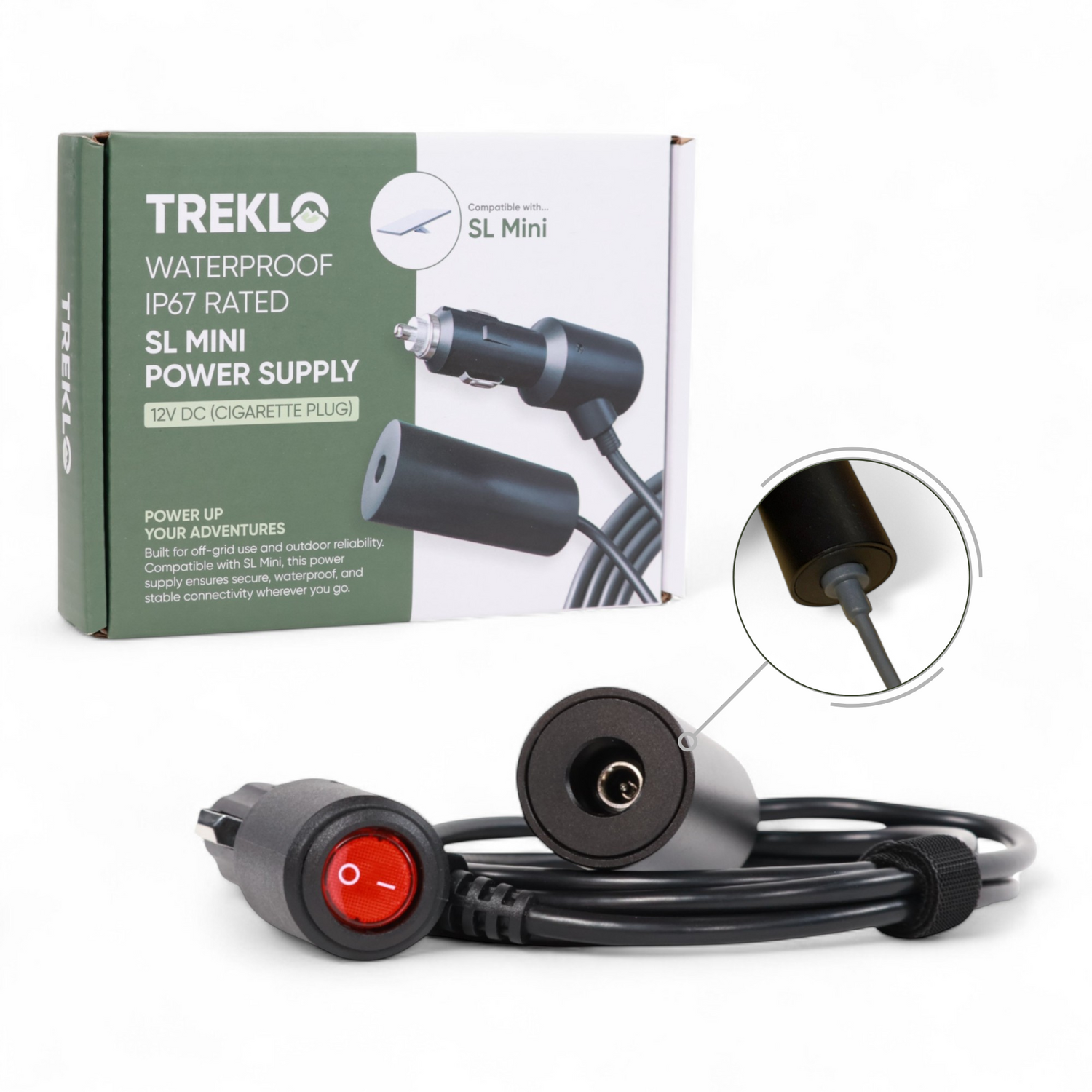
Starlink Mini 12V car adapters are the most common, featuring a standard cigarette lighter adapter or Anderson plug for input. The Starlink Mini cigarette lighter adapters we have so far tested in our campervan perform well. Of course, older adapters often shut down the dish when the battery voltage drops below 12V due to discharging. But we have managed to address this, using a more sophisticated Starlink Mini car adapter.
The newer adapter features a miniature 12–30V booster and an input voltage range of 10–28V. This ensures the Starlink Mini setup continues to operate at a constant 30V DC (its factory DC power recommendation) even when the battery has discharged below nominal voltage.
For campers with an Anderson plug, a Starlink Mini Anderson Plug adapter with the same 12–30V smart booster and 10–28V input range is also available.
Starlink DC Conversion Kits
For larger Starlink internet kits (Gen 1, Gen 2, Gen 3), DC-to-DC conversion kits are the most reliable power solutions for adventure vehicles. These kits convert your battery system's 12V/24V to the 48V, 56V or 57V required by your dish.
Our most popular Starlink DC conversion kits are for Gen 3 systems, followed by Gen 2:
- Starlink Gen 3 Plug and Play 12V Conversion Kit – with an input voltage of 10 to 30V and a 56V output
- Starlink Gen 3 12V DC Conversion Hub Adapter – with an input range voltage of 9 to 36V and a 57V output
- Starlink Gen 2 Plug and Play 12V Conversion Kit – with an input voltage of 10 to 30V and a 48V output
- Starlink Gen 2 12V DC Conversion Hub Adapter – with an input range voltage of 9 to 36V and a 48V output
Can a Victron 12V DC-DC Converter Power Starlink?
Yes, a Starlink internet system can be powered with a Victron converter. Starlink Gen 1, Gen 2 and Gen 3 require your camper's 12V to be stepped up to 56V, 48V and 57V, respectively, for optimal performance. (Gen 3 also works at 56V.)
Even the Starlink Mini, rated to operate at 12V, benefits from a voltage step-up to ensure consistent performance, especially during battery discharge. We have seen some Mini owners frustrated after they couldn't make it work on a 12V DC battery system. But this is usually an issue of voltage drop (we shall explain shortly).
Before dedicated Starlink Mini or DC conversion kits existed, we would build custom power supply units for our campervan. Our DIY DC power supply relied on a standard converter to step up the 12V battery output to 48V or 56V. Unfortunately, conventional converters are limited to a single output, making them specific to either the Gen 3 or Gen 2:
- 12 to 56V Boost (3 amp) Step-Up Converter – compatible with Starlink Gen 3
- 12 to 48V (3 amp) Boost Step-Up Converter – compatible with Starlink Gen 2
Meanwhile, Victron DC-DC converters often have a range of voltage outputs. Thus, you can use them to power different Starlink internet kits, provided they meet the minimum and maximum power requirements.
Victron 12V-to-30V Converters for Starlink Mini
Some people have had issues powering Starlink Mini directly from a 12V battery. The issue in many cases is due to voltage drop from its long cable.
The Starlink Mini typically operates at 25–40 watts, with the higher consumption being during startup and heavy workloads. Per Ohm's law, this equates to 2.1–3.4 amps (25W ÷ 12V and 40W ÷ 12V) of current.
The Mini's cable is thinner than those of Gen 1, Gen 2 and Gen 3 to enhance portability. However, this thinner profile cannot handle higher amperage due to voltage drop. When the Mini operates at 12V beyond the 1.3 amps (40W ÷ 30V) factory requirement, it results in less than 12 volts reaching the dish. With insufficient voltage, the total output power is inadequate to start the Mini's systems — hence the reason some owners complain about their dish not powering on when connected to a 12V DC battery.
Thankfully, a Victron Orion-TR 12/24-5A DC-to-DC Converter addresses this issue. It operates with an 8–17V input voltage range and outputs 18–30V@5 amps, meeting the Starlink Mini's factory power requirements.
Though not as advanced as newer models, this Victron converter includes a potentiometer to adjust the output to 20–30V DC manually. Its wide input voltage range also ensures the Mini operates at 30V DC (or another set voltage) even when the battery discharges below 12V.
For setup, you can connect the Victron Orion-TR converter's inputs to your camper's electrical system using bare wires or a dedicated connector (cigarette lighter socket, Anderson plug or O-ring terminals). The output can use a Starlink Mini male barrel jack connector (that plugs directly into the dish) or a Starlink Mini female DC5521 socket (that accepts the Starlink Mini cable's barrel jack).
Victron 12V-to-48V Converters for Starlink Gen 2
The Starlink Gen 2 has factory power requirements of 50–75 watts. When using a DC conversion kit with a low-power router, our power meter showed 38–42 watts, rising to around 54W during startup.
The Gen 2 requires a minimum voltage of 48V, so a Victron 12/48-8 DC-DC converter can efficiently power it. While we haven't tested this setup, it's in our 2025 bucket list. We shall provide an update after testing.
Based on our understanding of Starlink Gen 2 DC power requirements, though, this converter is sufficient. It outputs 40–60 volts @8 amps, with the voltage adjustable via a built-in potentiometer. It also has an 8–17V input voltage range, ensuring operation even when the battery charge drops below 12V.
Victron 12V-to-56V Converters for Starlink Gen 3
There is no dedicated 12V-to-56V Victron DC-DC converter. However, the Victron 12/48-8 DC-DC converter, mentioned above, delivers up to 60V@8 amps, sufficient to operate the Starlink Gen 3 (and Gen 1), requiring 56V or 57V.
While we have encountered Starlink Gen 3 owners using this setup in their campers, we haven't tested it ourselves. We plan to test this converter with both Gen 2 and Gen 3 dishes when it arrives.
Key Takeaway
Victron is a leading manufacturer of off-grid power systems for campervans, caravans, RVs and boondockers. It is a trusted name not just in Australia but globally, thanks to its extensive product catalogue and high quality.
Victron produces robust off-grid power systems designed for enhanced performance and durability. We currently use various Victron accessories in our campervan and have tested dozens, allowing us to vouch for their craftsmanship.
At Campervan Builders, we stock a variety of Victron products, including DC-DC converters. We have never had issues with their performance, which is why we confidently offer the products with a 5-year warranty.
Frequently Asked Questions About Starlink 12V Power
Is a Victron DC-DC converter for Starlink worth it?
Yes, a Victron DC-DC converter is worth using to power your Starlink kit. Beyond Starlink, these converters are versatile and can operate other DC gadgets — the models we referenced allow output voltage adjustment via an integrated potentiometer. Their 8–17V input range also ensures your Starlink (or other connected devices) continues to operate with a discharging or overcharged battery, and it ensures compatibility with batteries paired to traditional or smart alternators.
Why won't my Starlink Mini run directly off a 12V battery?
Usually because of voltage drop through the Mini's thin cable. When the dish draws more than the 1.3 amps (40W ÷ 30V) factory requirement at 12V, less than 12 volts reaches the dish, leaving insufficient power to start its systems. A step-up converter or booster adapter that holds a constant 30V DC solves this.
What voltage does each Starlink kit need on DC power?
The Gen 1 needs 56V, the Gen 2 needs 48V, the Gen 3 needs 57V (it also works at 56V), and the Mini is rated at 12–48V with a factory recommendation of 30V DC at 60W.
Which Victron converter suits the Starlink Gen 3?
There is no dedicated 12V-to-56V Victron model, but the Victron 12/48-8 delivers up to 60V@8 amps — sufficient for the Gen 3 (and Gen 1) requirement of 56V or 57V. We've encountered Gen 3 owners running this setup, though we haven't tested it ourselves yet.
Ready to get your dish running off the batteries? Explore Starlink adapters, conversion kits and Victron DC-DC converters at Campervan Builders — all backed by our 5-year warranty on Victron gear.